
Also known as sidemembers, heat channels, rocker boxes, or sills.
Call them what you want — they are the foundation of a Volkswagen Karmann Ghia body.
You can bolt on chrome.
You can polish paint.
You can rebuild engines.
But if your rockers are compromised, your Ghia is standing on shaky ground.

Let’s build one.
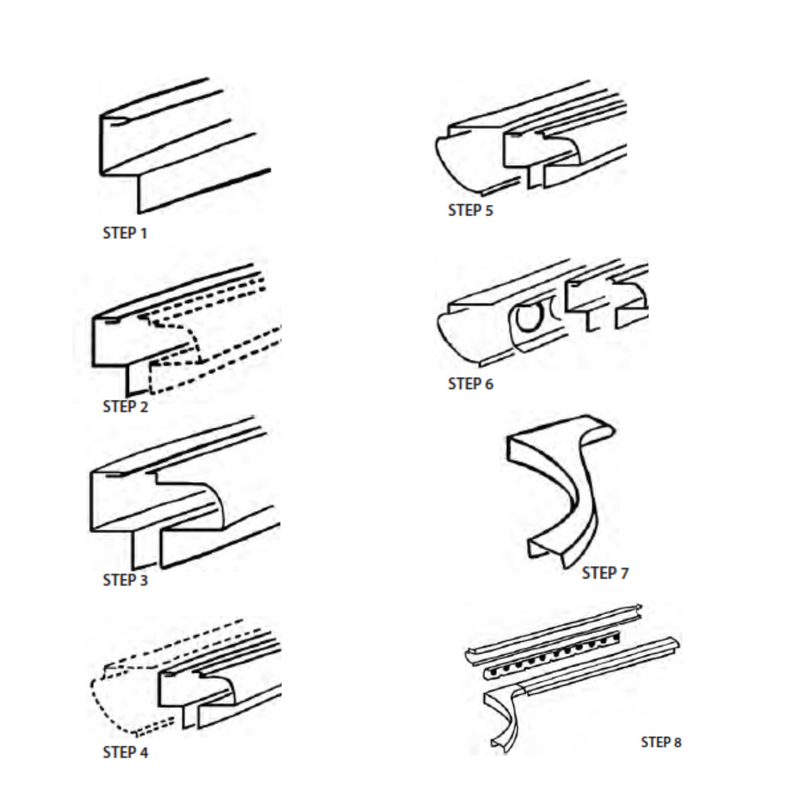
Step 1: The Piece You Never See
Start with a four-foot-long strip of metal about four inches high.
This is the central divider.
It is never seen. Ever. But it is critical.
Step 2: The Carpet Wall
Now add a vaguely “C”-shaped piece of metal — also four feet long and four inches high.
This is the carpet wall.
You can glimpse it only if you pry up the carpet under the door.
Still not glamorous. Still essential.
Step 3: Create the Hollow Straw
Weld the central divider to the carpet wall and you’ve created a hollow metal chamber.
Think of it as a four-foot-long steel straw.
This hollow structure is not empty by accident. Heated air from the engine travels through this chamber on its way to:
-
The outlets near the driver’s toes
-
The dash defroster vents
Yes. Your rocker is part of your heating system.
Caged or blind nuts are installed along the flat section so the rocker can bolt securely to the frame or pan.
Lightweight. Strong. Purposeful.
Step 4 and 5: The Outer Rocker
Now we add strength.
An additional reinforcing piece dramatically increases rigidity with very little weight penalty.
Finally, we add the outer rocker cover — the only easily visible portion of the entire assembly. And even then, only about three feet of it, directly under the door, is actually seen.
For a coupe, these three pieces — central divider, carpet wall, and outer rocker — form a stout, well-engineered foundation.
Convertibles Need More
A convertible lacks the structural advantage of a metal roof.
So Karmann added another layer.
Between the central divider and outer rocker sits a convertible stiffening plate — essentially a channel iron piece that has been strategically lightened with cutouts.
Four pieces instead of three.
More strength. Minimal weight gain.
Fun fact: The factory once sold a replacement “side member” over the parts counter. It was simply a pre-welded central divider and carpet wall — and at one point cost around $1500.
Foundation is not cheap.
The Curve Around the Wheel
If rockers ran straight the entire length of the car, life would be simple.
But wheels get in the way.
Forward of the doors, the rocker curves inward to clear the tire. This dog-legged section sits beneath what we call the kick panel area.
Lift the carpet at the base of the kick panel and you’ll see it.
It resembles an upside-down, curved section of household rain gutter.
To complete it, a flat bottom is welded on — again with caged nuts so the pan bolts securely to the rocker assembly.
Attach this curved kick panel base to the heat channel section and you’ve created the entire inner rocker structure.
Beauty Is Supported by Steel
When finished, what you have is not just a sill.
You have:
-
Structural backbone
-
Heating ductwork
-
Mounting system
-
Crash support
-
Convertible reinforcement
All hidden beneath that elegant body line.
It is one of the most misunderstood and underappreciated systems on the car.
And without it, nothing else matters.
Because before chrome, before paint, before upholstery — there must be foundation.
And here at The Ghia Gab,
We Speak Karmann Ghia.